|
Biological Mosquito Control by Native Zooplankton
This pilot project aims to determine whether native freshwater copepods in Talbot and Dorchester Counties can feed on the mosquito larvae that breed in ponds and containers. Our project seeks to answer three questions:
- What mosquitoes are found in Talbot and Dorchester counties?
- What species of native copepods eat larval mosquitoes?
- Can we use these native copepods to control mosquitoes?
We will focus on container breeding mosquitos that are found in places where standing water exists and for which we have already developed methods for their capture.
Background:
Mosquitos are abundant on the Eastern Shore during warmer weather. Local governments and property owners exert great time, effort, and funding resources to control their populations. The State of Maryland currently monitors for the occurrence of a variety of mosquito borne diseases, including Zika Virus, eastern equine encephalitis virus, West Nile virus, and St. Louis encephalitis and others occurring in mosquitoes, wild birds, domestic animals and humans. Thus, mosquito control is an issue that affects the quality of life for everyone on the Eastern Shore, particularly for those who enjoy the outdoors, and also plays a key role in public health. Current control efforts are largely focused on spraying larvicides that kill mosquito eggs and larvae, with some other programs aimed at targeting adults in certain places. These sprays are often not specific to mosquitos, and thus can adversely affect many other members of the ecosystem. Additionally, invasive species of mosquito compete with native species, and often can affect the transmission of disease and pollination in ways that may also upset the ecosystem
In some places, more ecologically safe and conservation-oriented biological control agents are employed, in which fish and birds eat larval and adult stages of the mosquito. The efficacy of these strategies is yet to be known. Two states have utilized crustacean zooplankton called copepods as biological control agents because some species are known to eat larval mosquitos. Copepods are a diverse group of animals that are found in nearly all bodies of water, from the deep ocean to high alpine lakes, and they may be the most abundant group of animals on earth.
 |
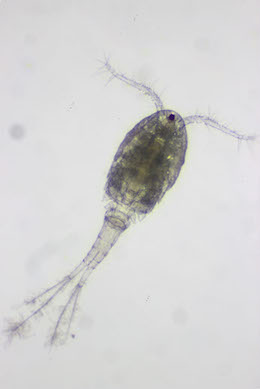 |
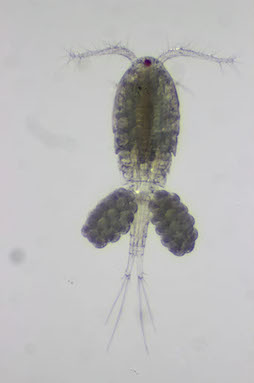
| Acanthocyclops robustus female (left) and male (right). Photo credit: Catherine Fitzgerald. |
|
 |












 ORCID profile